September 16, 2026
Orlando, FL - September 16, 2026 -
db Orlando Collision West has published new consumer guidance explaining how OEM repair procedure research contributes to collision repair planning. The September publication narrows the subject to the research stage of the repair process, showing how technicians connect an identified vehicle and damaged component with manufacturer information relevant to the work being considered.
The new guidance adds a three-part framework to the company's existing consumer information: identify the vehicle and affected components, locate applicable manufacturer procedures, and incorporate relevant technical requirements into the documented repair plan. This component-level focus distinguishes the September publication from a broader overview of collision repair.
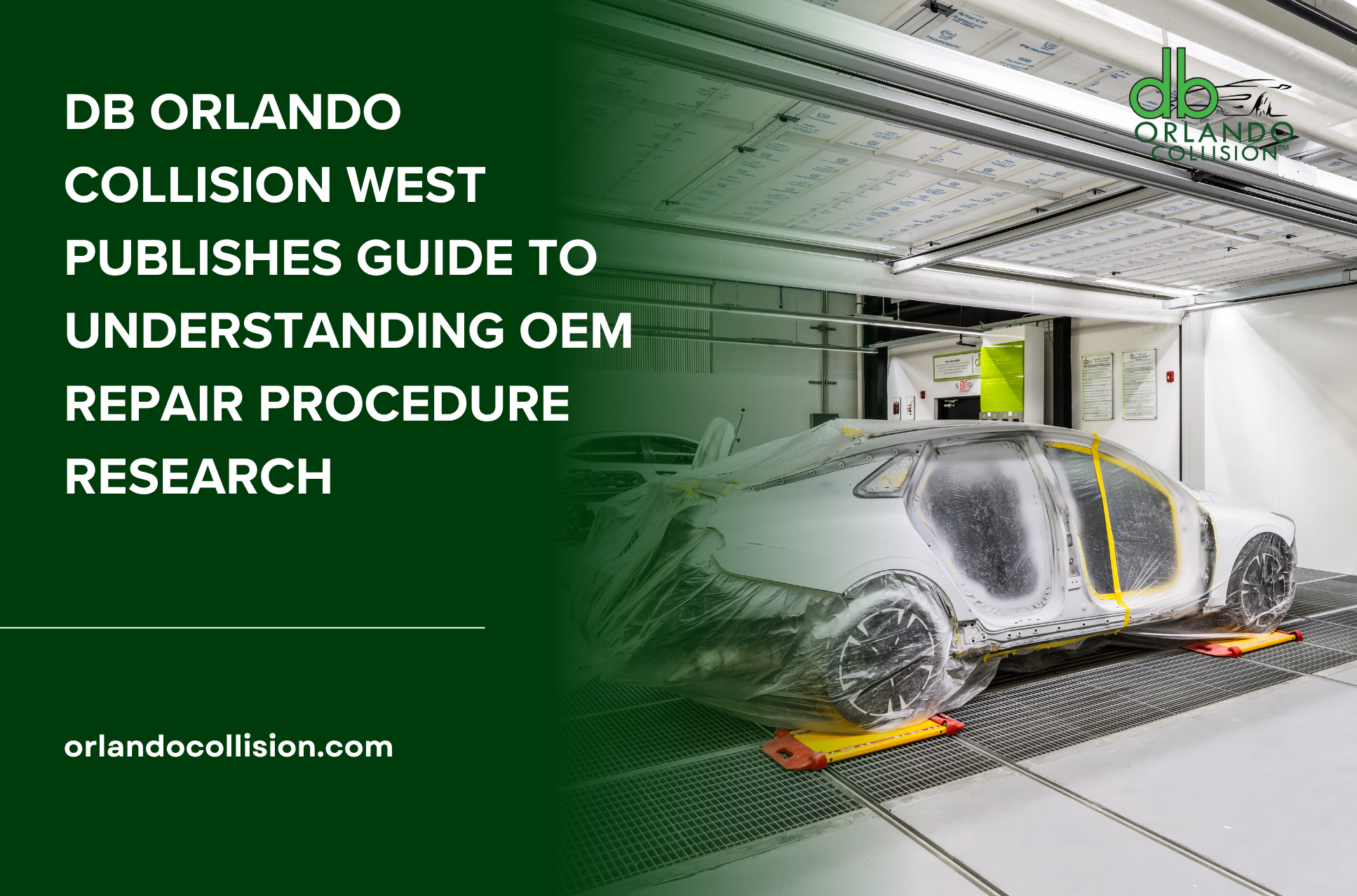
Vehicle identification is the starting point because similar-looking collision damage does not necessarily involve identical components or construction. Make, model, model year, body configuration, installed equipment, and the specific parts affected can influence which manufacturer information applies.
Modern vehicles can incorporate different grades of steel, aluminum, plastics, composites, adhesives, mechanical fasteners, and other materials and joining methods. Construction can also vary between different areas of the same vehicle.
As a result, technicians researching a damaged component need information specific to that vehicle rather than relying solely on how the damage appears from the exterior. Broader information about this process is available through db Orlando Collision West's collision repair information.
Once the vehicle and affected components have been identified, the second stage involves researching manufacturer procedures associated with the repair operations under consideration.
Depending on the component, manufacturer information may address repairability, replacement requirements, removal and installation, joining methods, attachment locations, inspections, corrosion protection, refinishing, or other technical procedures. The information provides a technical reference for evaluating the documented collision damage.
Repair-versus-replacement decisions illustrate the role of this research. Two panels may have comparable dents or deformation but differ in material, construction, attachment method, or manufacturer repair limitations. Those differences can lead to different repair plans even when the exterior damage initially appears similar.
The same research process can apply when collision-affected areas contain modern vehicle technology. Cameras, radar units, sensors, electronic modules, wiring, and related equipment can be incorporated into or positioned near exterior components.
Manufacturer information can identify whether the repair operations involving those areas have corresponding scanning, calibration, inspection, or other requirements. The presence of electronic technology alone does not establish that any particular procedure is necessary.
The September publication also clarifies a separate issue involving OEM certification and OEM procedure research. Manufacturer certification programs and researching technical repair information serve different functions.
Certification programs can establish standards involving areas such as training, equipment, facility capabilities, and access to repair information. Procedure research focuses on locating and applying technical information relevant to the individual vehicle and repair operation. Additional information about db Orlando Collision's manufacturer programs is available through its OEM Certification Programs information.
The final stage of the framework addresses how applicable manufacturer information becomes part of repair planning.
An initial evaluation establishes the collision damage and components that can reasonably be identified at that stage. Research can then provide technical information associated with those components. If repair planning later provides access to previously covered areas, newly documented conditions can be evaluated using the same vehicle-specific information.
This progression helps explain why a developed repair plan can contain more technical detail than an initial exterior assessment. The difference can reflect additional access and research rather than a contradiction between the two stages.
The new September resource is specifically intended to make that research process more visible to consumers. Collision repair documentation may list individual operations without showing the technical research used to determine why those operations apply. By separating the process into identification, research, and documentation, the publication provides context for how those decisions are developed.
It also explains why repair methods should not automatically be transferred from one vehicle to another based on similar-looking damage. A component's construction and applicable manufacturer information can be as important to repair planning as the visible characteristics of the impact.
For consumers, the framework can be summarized as a sequence rather than a set of technical decisions they are expected to make themselves. The vehicle and damaged components are identified first. Applicable manufacturer information is then researched. Relevant requirements are incorporated into the repair plan based on the documented condition and work being considered.
This three-stage explanation is the primary addition made by the September publication to db Orlando Collision West's existing consumer repair information. It concentrates on a part of collision repair planning that occurs after damage identification but before the applicable repair procedures are finalized.
By publishing the guidance, db Orlando Collision West is providing a more defined explanation of how OEM procedure research connects vehicle-specific information with documented collision damage. The resource is educational and does not predict which repair, replacement, diagnostic, or calibration procedures will apply to a vehicle before it has been evaluated.
Additional information about the facility is available through the db Orlando Collision West location information.
db Orlando Collision West serves vehicle owners in Orlando and surrounding Central Florida communities from its facility at 6359 Edgewater Dr, Orlando, FL 32810. The facility provides collision repair, auto body repair, repair planning, and related vehicle restoration services.
###
For more information about db Orlando Collision - West, contact the company here:
db Orlando Collision - West
Drew
407-436-6500
Drew@orlandocollision.com
6359 Edgewater Dr, Orlando, FL 32810, United States
db Orlando Collision – West provides factory-certified collision repair in Orlando, FL. We specialize in structural repairs, dent repair, refinishing, glass replacement, and ADAS calibrations with loaner cars and a lifetime warranty.
Drew
6359 Edgewater Dr, Orlando, FL 32810, United States
407-436-6500
Drew@orlandocollision.com
Visit Website