September 16, 2026
Omaha, NE - September 16, 2026 -
Shadow Lake Collision has published September consumer guidance explaining how rear-end collision damage is evaluated beyond the visible bumper cover. The resource introduces a component-based framework that separates the rear of the vehicle into three areas for evaluation: the visible exterior, components and attachment points behind the bumper, and vehicle-specific electronic or structural systems associated with the impact.
The guidance adds a rear-impact-specific explanation to Shadow Lake Collision’s collision repair information. Its purpose is to help consumers understand why the appearance of a rear bumper establishes a starting point for evaluation rather than determining the complete repair scope.
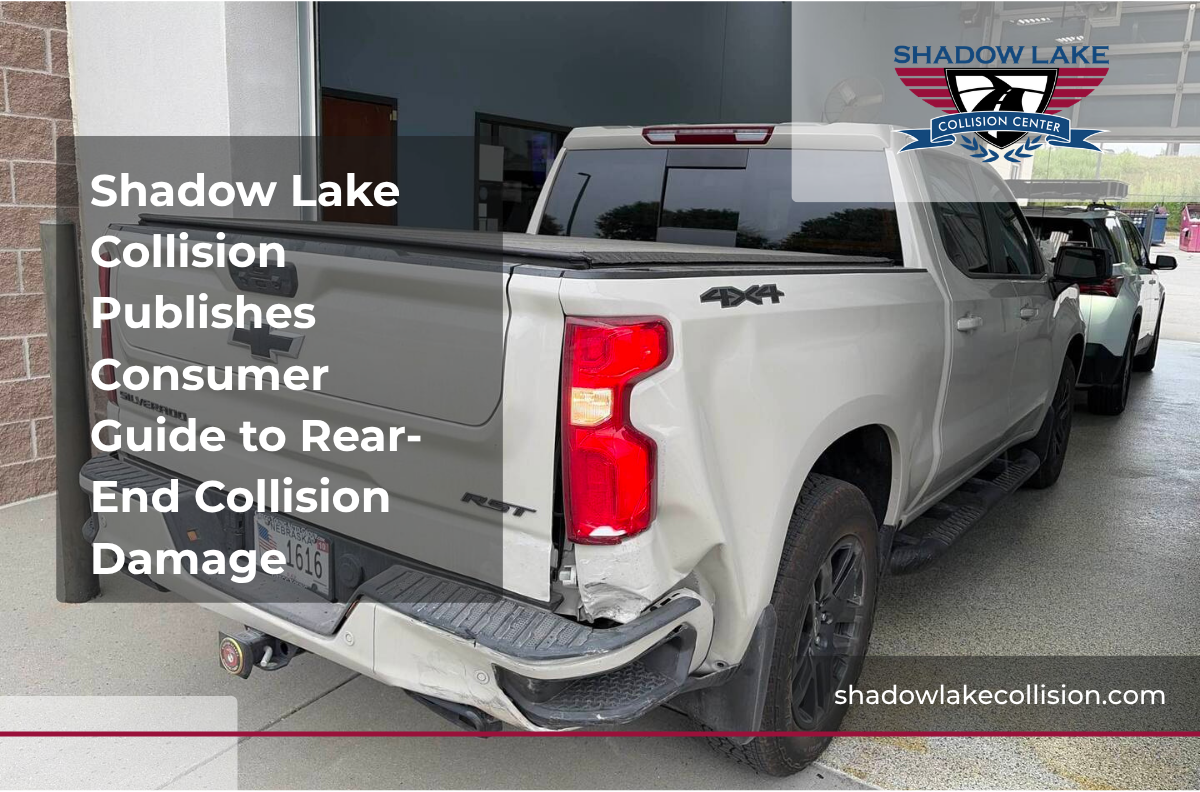
During an initial inspection, technicians can document conditions that are reasonably visible while the vehicle remains assembled. These may include a cracked or displaced bumper cover, damaged paint, broken lamps, a dented trunk lid or liftgate, quarter-panel damage, or changes in the position of adjoining components.
The location and characteristics of those conditions help establish where additional evaluation may be appropriate. Rear-end collisions vary in direction and severity, so the components relevant to one vehicle may differ from those involved in another apparently similar accident.
The second part of the framework addresses components positioned behind the bumper cover. Depending on the vehicle, these can include absorbers, reinforcement components, brackets, fasteners, wiring, and mounting locations. Some of these areas may not be fully accessible during the initial exterior inspection.
When appropriate disassembly provides access, technicians can document the condition of components associated with the impact. This allows the developed repair plan to distinguish between damage that was visible initially and additional conditions that were identified only after access became available.
A displaced bumper illustrates the process. Exterior inspection can establish the condition of the bumper cover, while subsequent access can allow its brackets, mounting locations, reinforcement area, and adjoining components to be evaluated separately. The repair scope is then based on documented findings rather than an assumption that everything behind the bumper was either damaged or unaffected.
Rear impacts can also involve body areas beyond the bumper assembly. Depending on the collision, the trunk or liftgate, rear body area, quarter panels, lamps, and adjoining exterior components may require evaluation.
Shadow Lake Collision provides additional information about repairing damaged exterior components through its auto body repair resource.
The third part of the September framework addresses technology and structural areas when they are relevant to the individual vehicle. Modern rear bumpers and adjoining components can contain or sit near parking sensors, cameras, wiring, radar-related equipment, and other electronics.
Identifying this equipment is important because vehicle configurations differ. The presence of a camera or sensor near an impact does not establish that the component was damaged or that calibration is automatically required. Instead, technicians can identify the affected components and determine which manufacturer procedures correspond with the documented repair operations.
The same evidence-based approach applies to structural evaluation. Rear bumper damage alone does not establish that the underlying vehicle structure has been affected. When the impact or inspection findings make structural areas relevant, appropriate access and measurement can provide information about their actual condition.
The September resource also explains why the repair plan can develop after the initial estimate. The first assessment reflects information reasonably available while the vehicle is assembled. Appropriate disassembly can expose areas that were previously inaccessible and provide additional information about the impact.
If inspection identifies additional collision-related damage, those findings can be incorporated into the developed repair plan. If no additional conditions are identified, that finding also helps establish the repair scope. This progression represents different stages of evaluating the vehicle rather than automatically indicating that the initial assessment was incomplete or incorrect.
Vehicle construction further influences rear-impact repair planning. Bumper assemblies, attachment methods, body materials, electronic equipment, and structural designs vary among makes, models, model years, and configurations. Similar-looking exterior damage can therefore lead to different documented repair requirements.
Manufacturer information can provide technical direction after affected components have been identified. Depending on the vehicle and repair operation, applicable procedures may address component removal and installation, replacement requirements, structural measurements, joining methods, corrosion protection, diagnostic procedures, or calibration-related operations.
The September guidance is designed to give consumers a clearer way to understand these differences without categorizing a rear-end collision as minor or major based solely on exterior appearance. Instead, it separates the evaluation into the visible impact area, components accessible after appropriate disassembly, and vehicle-specific systems relevant to the documented repair.
This framework also distinguishes cosmetic restoration from broader collision repair planning. Restoring a damaged bumper cover or exterior panel addresses a visible condition, while repair planning determines whether other components associated with the same impact require documented repair operations.
Additional information about Shadow Lake Collision and its Omaha facility is available through the Omaha location resource.
The central point of the September publication is that rear-end collision damage should be evaluated component by component. Visible conditions establish where the evaluation begins, appropriate access provides information about covered areas, and vehicle-specific procedures help determine how documented damage should be addressed.
Shadow Lake Collision provides collision and auto body repair services for drivers in Omaha, Papillion, and surrounding Nebraska communities. Its Omaha facility is located at 4040 S 84th St, Omaha, NE 68127.
###
For more information about Shadow Lake Collision - Omaha, contact the company here:
Shadow Lake Collision - Omaha
Eric Dawson
(402) 915-8400
info@shadowlakecollision.com
4040 S 84th St, Omaha, NE 68127
Shadow Lake Collision has served Omaha and Papillion since 1975 with trusted collision repair and honest service. Family-owned and operated, we’re committed to quality workmanship and treating every customer like family.
Eric Dawson
4040 S 84th St, Omaha, NE 68127
(402) 915-8400
info@shadowlakecollision.com
Visit Website